
1. Introduction
Thinkers have long delved into the inquiry of motion. As far back as the 5th century B.C., Zeno of Elea went to great lengths to question its existence with his atomistic view of the world. He demonstrated this with the arrow paradox. First, let’s envisage an arrow in flight. At any given moment, it can be considered to occupy a finite position in space, a precise point. However, is it truly stationary at that moment? Is the movement merely the illusion of an « end-to-end » transition, creating the appearance of continuity? It wasn’t until the introduction of infinitesimal calculus 2,000 years later that we found an answer to this enigma: the arrow traverses an infinite number of finite distances.
Furthermore, considering our human experience, which is bound by the limitations of our perceptual apparatus, it’s understandable that this question arises. Recent discoveries from cognitive sciences offer another logical explanation: we must deal with different types of memory, each « specialized » in processing information of specific temporal dimensions (short-term theme memory, long-term memory). Thus, what we perceive as the « present moment » (a window of time perceived as continuous) is limited to a duration of more or less seven seconds. These perceptions are then stored in abstract form (memories) in an unconscious part of the brain known as long-term memory. When we recall an event, we « repatriate » these diverse memories to the conscious part of the brain. We then have to integrate them to form a complete mental representation. This diversity in memory may well explain the ambiguity inherent in our perception of movement, as raised by the atomists and Zeno of Elea.
Music supports this cognitivist vision. Composing a melody involves segmenting time into a series of notes (discontinuity, immobility) and then reassembling them, performed by the artist, into a coherent musical phrase (continuity, movement). Additionally, the listener cannot grasp the entirety of a piece as pure continuity. They have to immerse themselves in it, from one « present moment » to the next, to mentally reconstruct, a posteriori, the overall shape of the work they have heard.
Isn’t this true of every art form? Whether contemplating the brushstrokes that form a canvas or the filmmaker who crafts a sequence of images (24 per second), art often materializes when an illusion of continuity emerges or, as in music, when a synergy between disjointed elements allows them to coalesce into a coherent whole, giving rise to the possibility of movement.

Dinamica Circolare 6S+S, 1966. Marina Apollonio
2. Kinetic art
In physics, there exists a precise term for the energy that empowers an object in a dormant state to initiate motion—it’s known as kinetic energy. By drawing an analogy, could we not assert that art possesses kinetic potential when it amalgamates disjointed, « inert » elements (such as notes, lines, words, or images) to give them coherence (impart a direction) and set them into motion?
Kinetic energy is typically defined as the energy expended by a body due to its movement concerning a designated position referred to as a « frame of reference. » For instance, the force exerted by a roller-coaster carriage is quantified in joules, contingent upon the angle and length of the slope it traverses.
But in its broader sense, kinetic artworks are those that make movement their playground. The Larousse definition gives us an historical overview:
Born of the convergence of isolated manifestations, Cinetisme emerged as a trend in the late 1950s, with the attempt by certain artists (Agam, Pol Bury, Soto and Tinguely) to introduce movement into the plastic arts. The Futurists (Balla, Boccioni, Carra) and Marcel Duchamp (Nude descending a staircase, 1913, Philadelphia Museum) had tried to restore movement by decomposing it. In 1913, the latter produced the first truly mobile work: a bicycle wheel fixed to a stool. In the ’20s, Naum Gabo, with a moving rod animated by a motor, and Vladimir Tatline, with his project for a monument to the Third International, a gigantic edifice that was to include moving parts, took an interest in movement.[…]2
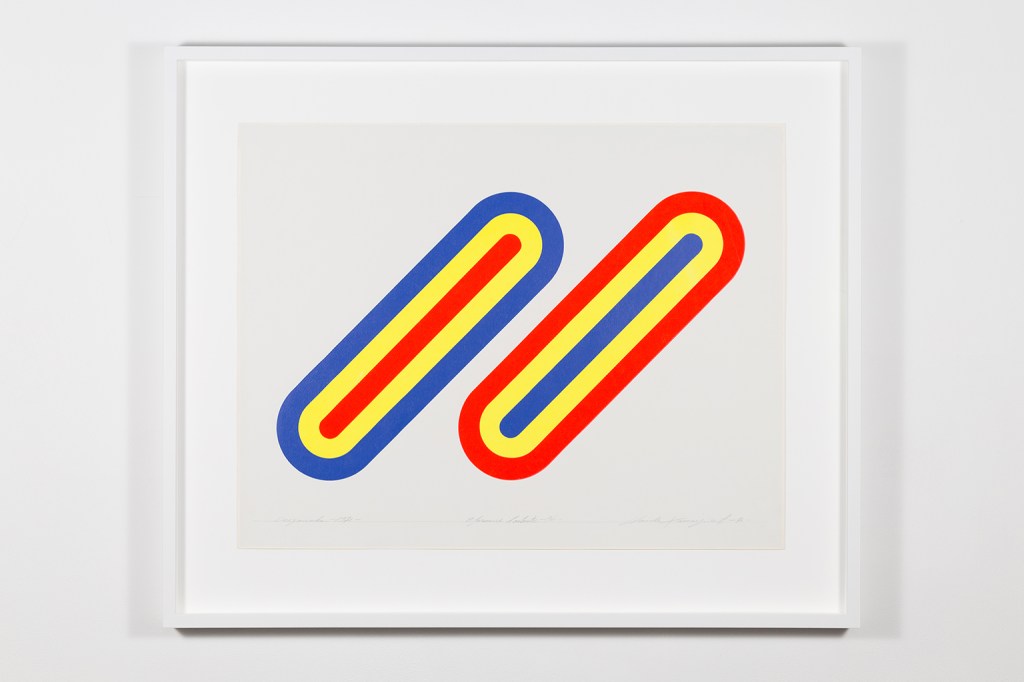
Visual artist Marcel Duchamp and his « Bicycle Wheel » are usually credited with the first instance of a properly kinetic work of art. Another approach would be, for example, the concentric circles of Quebec painter Claude Tousignant. Here, the asymmetrical distribution of colors creates an optical illusion of movement.
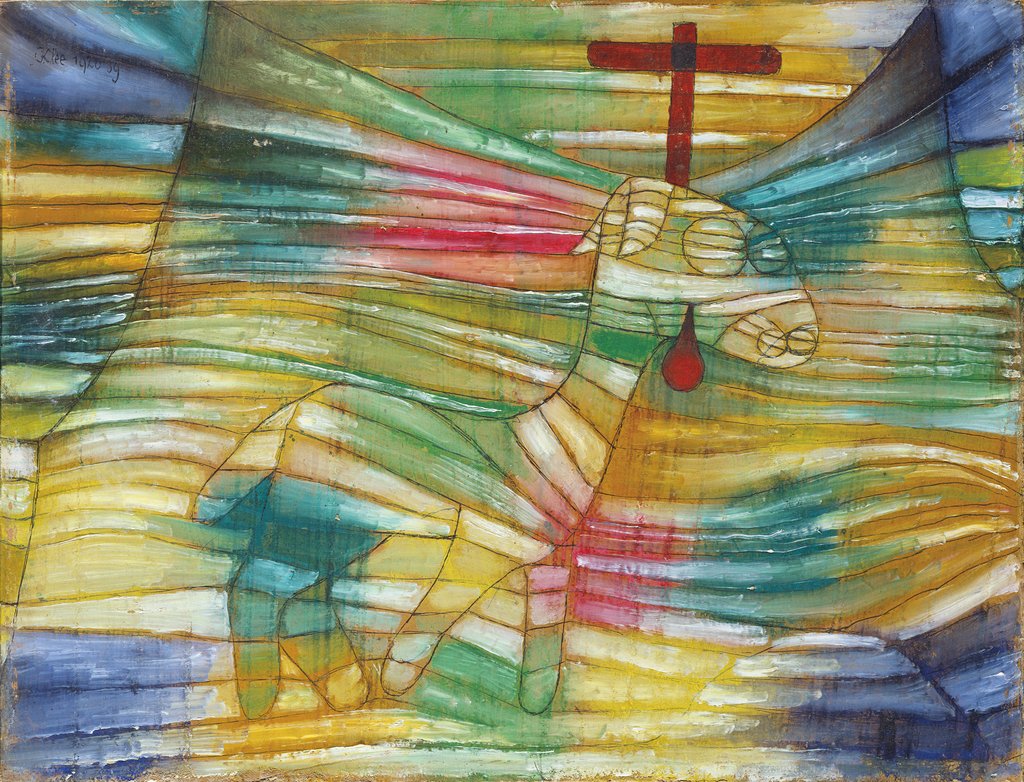
The German painter Paul Klee used a similar notion, that of vector, to describe the possibility of movement in visual art. In his book Théorie de l’art moderne1, the painter uses this term to designate the dynamic aspect of a graphic composition: whereas a point is static, a line is perceived as a point in motion, while a curve shows this same motion bifurcating under the effect of forces we call vectors.
The Wikipedia article on kinetic art offers another, very interesting lead:
Kinetic art is an artistic movement that produces works containing moving parts. Movement can be produced by the wind, the sun, a motor or the viewer.3
From this perspective, movement can also be seen as a psychological phenomenon, taking shape in the viewer’s perception. It can thus be conceived as an illusion, an artifice; an intentional side-effect due to the limitations of our perception.
3. Movement in music
Indeed, the history of music is intricately linked with that of dance. Allemande, gigue, sarabande—all these musical forms find their roots in dance. It’s not an overstatement, then, to assert that the concept of movement holds a central position in music.
To mold the temporal progression, composers have primarily employed harmonic relationships specific to tonal language. These create tensions and releases, giving rise to a recognizable form of movement: the cadence. Alternatively, in counterpoint, intentional lack of directionality, facilitated by the independence of voices, imparts a sublime sensation of floating—a static state.
Nevertheless, over the past century, the exploration of movement in music seems to have gained autonomy from the more « classical » elements of musical discourse. Consider the works of composers like Debussy or Ravel, often characterized as « plastic. » For instance, in Claude Debussy’s 1913 symphonic ballet « Jeux, poème dansé, » the composer draws inspiration from the energetic profile of a tennis ball to shape his thematic elements, such as the chromatic descending motif initially heard in bassoons and cellos.
Or, in Pacific 231, Arthur Honegger models the form of his work on that of a train journey.Using all sound parameters (rhythm, harmony, nuances and orchestration), the composer makes the orchestra sound like a train leaving the station, then making its way to its destination.Listen first to the whistling of the train, followed by the typical acceleration (the end, the arrival at the station, is also worth a listen):
This is one of the notable effects of these approaches on compositional language: secondary parameters (orchestration, nuances, rhythm) occupy an increasingly important place in musical syntax.
3.1 Dynamic Forms
Despite the importance of movement in music, we had to wait for Lasse Thoresen’s eminent work on auditory sonology, « Emergent Musical Form 4 », to find a rigorous definition. More precisely, it is through the notion of « dynamic forms » that the author provides a real key to understanding.
The perceptual category of dynamic forms catalogs the three types of large-scale energy trends. These forms can be classified according to the orientation of their tendency: decreasing (e.g. a decelerando), static (e.g. a static cloud of sound) or increasing (e.g. a build-up). A simple notation, evoking energetic accumulation or dispersion, is offered by Thoresen:
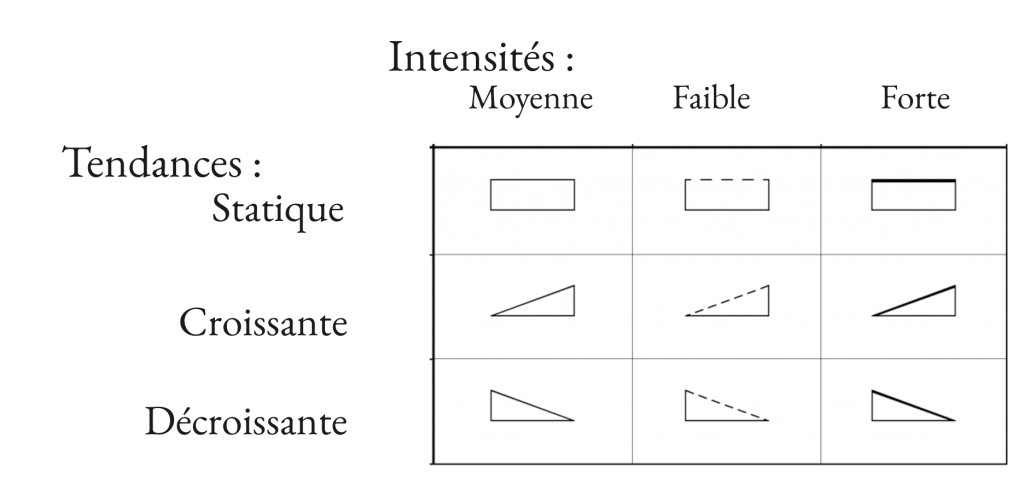
To comprehend dynamic forms fully, it’s crucial to understand how they arise from the diverse musical dimensions that underpin them. The perception of these tendencies emerges from the synergy among various dimensions constituting music. Pitch, nuance, rhythm, and orchestration, when working together, create impressions of energetic growth or decay.
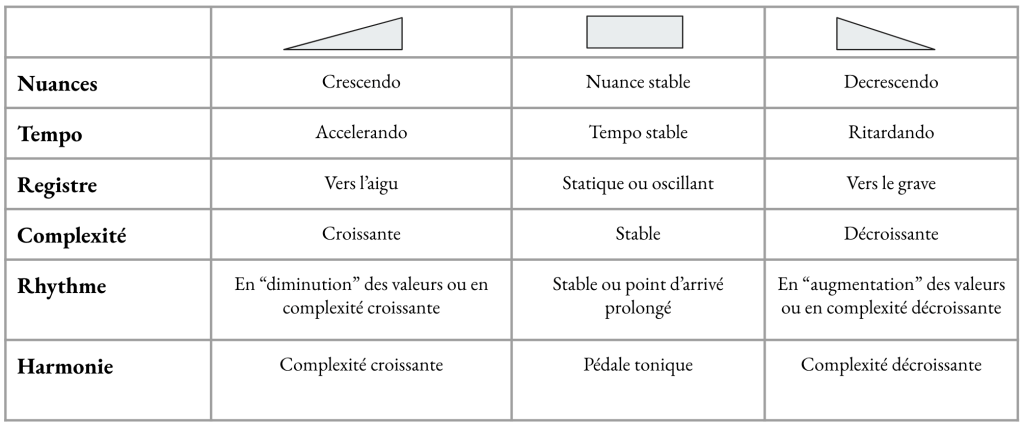
Also, the greater the number of musical dimensions affected by the same tendency, the more intense will be the perception of it. For example, when three dimensions (let’s say rhythm, pitches and nuances) collaborate to perceive the same tendency, a greater force will be felt than when only one dimension is involved.
4. Exemples of kinetic music :
Simply consider the synergistic potential of sound dimensions when composing, and you may be able to control their effects. Taking this phenomenological principle into account is the paradigm of kinetic music.
Why this fascination with movement in the first place? Perhaps because it is captivating to our ears, insofar as every listener is naturally familiar with the unfolding in time of physical phenomena. Let’s take a ping-pong ball as an example:
The sounds of a ping-pong ball
As it falls, it produces (in musical terms) an accelerando and a decrescendo. It is then possible for the composer to model this type of synergy to produce kinetic musical material.
This is what Gérard Grisey does brilliantly in his piece Le noir de l’étoile. Inspired by pulsar sound recordings, the composer synergistically exploits a correspondence between rhythm and pitch. In the following extract, the speed of the percussion slows down in proportion to the pitches produced by the wooden drums:
Le noir de l’étoile (excerpt), 1990, Gérard Grisey
In my piece Dériver, for example, I have joined decrescendo and deceleration to simulate the effects of ripples on water, another natural, kinetic phenomenon that suggests entropy:
Dériver (excerpt), 2020, Gabriel Dufour-Laperrière
By making a maximum of sound dimensions work together, it’s possible to achieve a strong directionality, here evoking an abrupt fall. You’ll notice an acceleration, an increasingly rapid descent in pitch, growing nuances and a consequent variation in timbre.
Dériver (excerpt), 2020, Gabriel Dufour-Laperrière
These compositional strategies can also be used to create hypnotic mass effects. For example, in one section of Nimrod, the asynchronicity-synchronicity dichotomy of voices becomes a musical dimension for generating movement:
Nimrod (excerpt), 2020, Gabriel Dufour-Laperrière
Or, in another section of Dériver, a sort of Moëbius ribbon is created using rhythm and pitches:
Dériver (excerpt), 2020, Gabriel Dufour-Laperrière
As a final example, another twisting effect similar to the previous one, here thanks to the bass slide:
Dériver (excerpt), 2020, Gabriel Dufour-Laperrière
1 Klee, Paul, and Findlay, Paul. 1966. On modern art. London: Faber.
2 Cinétisme, 12 octobre 2022. Dans Le Larousse. https://www.larousse.fr/encyclopedie/peinture/cin%C3%A9tisme/151599
3 Art cinétique, 12 octobre 2022. Dans Wikipedia. https://fr.wikipedia.org/wiki/Art_cin%C3%A9tique
4 Thoresen, Lasse. 2015. Emergent Musical Forms: An Aural Exploration. Studies in music from the University of Western Ontario. London 24.
 Gabriel Dufour-Laperrière